Every monsoon, we get the same panicked phone calls from sites: 'The blocks got soaked. Are they ruined?' Short answer: usually no. Long answer: it depends on three things you control on site. Here's how to never make that phone call.
Rule 1 — Stack on pallets, never on the ground
AAC blocks ship on wooden EUR pallets for a reason. The pallet keeps the bottom course 100 mm above any ground water. On a sloped site, position pallets on the highest accessible point. Never break a pallet down to free up storage area — store at full pallet height (typically 6–8 courses) and only break a pallet on the day of use.
Rule 2 — Use the right tarp, the right way
Standard blue HDPE tarpaulin works fine. Two tips that matter: drape with a ridge (peak in the middle, sloping down both sides) so water runs off — flat tarps pool water and the weight eventually breaks the wrap. And leave the bottom 200 mm uncovered for airflow — completely sealed tarps trap condensation, which is worse than rain.
Rule 3 — The 48-hour rule for laid walls
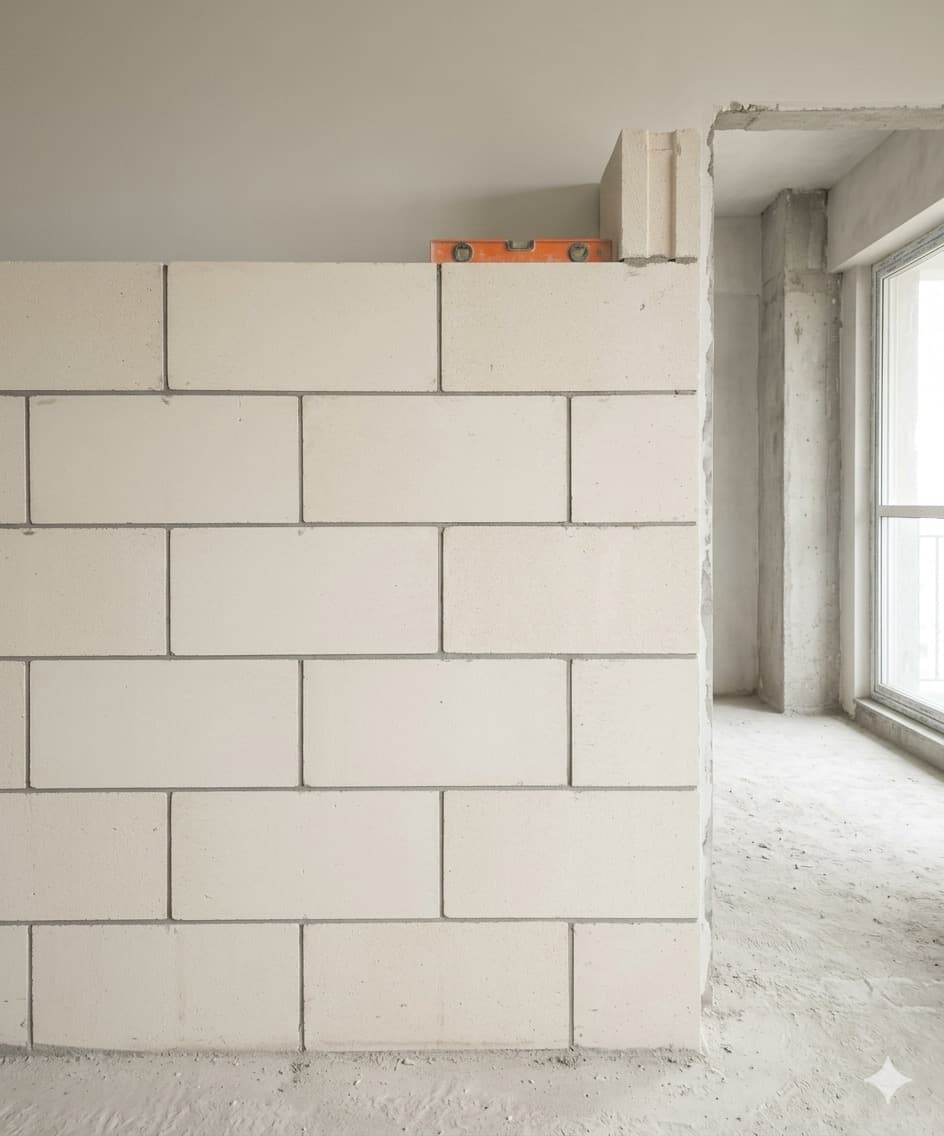
If a freshly laid AAC wall is heavily rained on within 48 hours of laying, the thin-bed adhesive hasn't fully cured. Water can wick into the joint and cause efflorescence weeks later (the white powdery stains everyone hates). Cover any wall laid in the previous 48 hours with a plastic sheet during heavy rain. After 48 hours the joint is fully cured and rain is harmless.
What soaked blocks actually do
An AAC block that's been rained on isn't damaged — it's just heavy. It will absorb water up to 30% of its own weight. Before laying, let soaked blocks dry under cover for 48 hours. The block returns to its original weight as water evaporates. Compressive strength is unaffected. Don't lay wet blocks: the wet face won't bond properly to the adhesive.
Follow these three rules and you'll have zero monsoon losses. Skip them and you're paying for blocks that go to waste — and worse, walls that look ugly six months later. Train your site team on this in May, before the first cloud arrives.