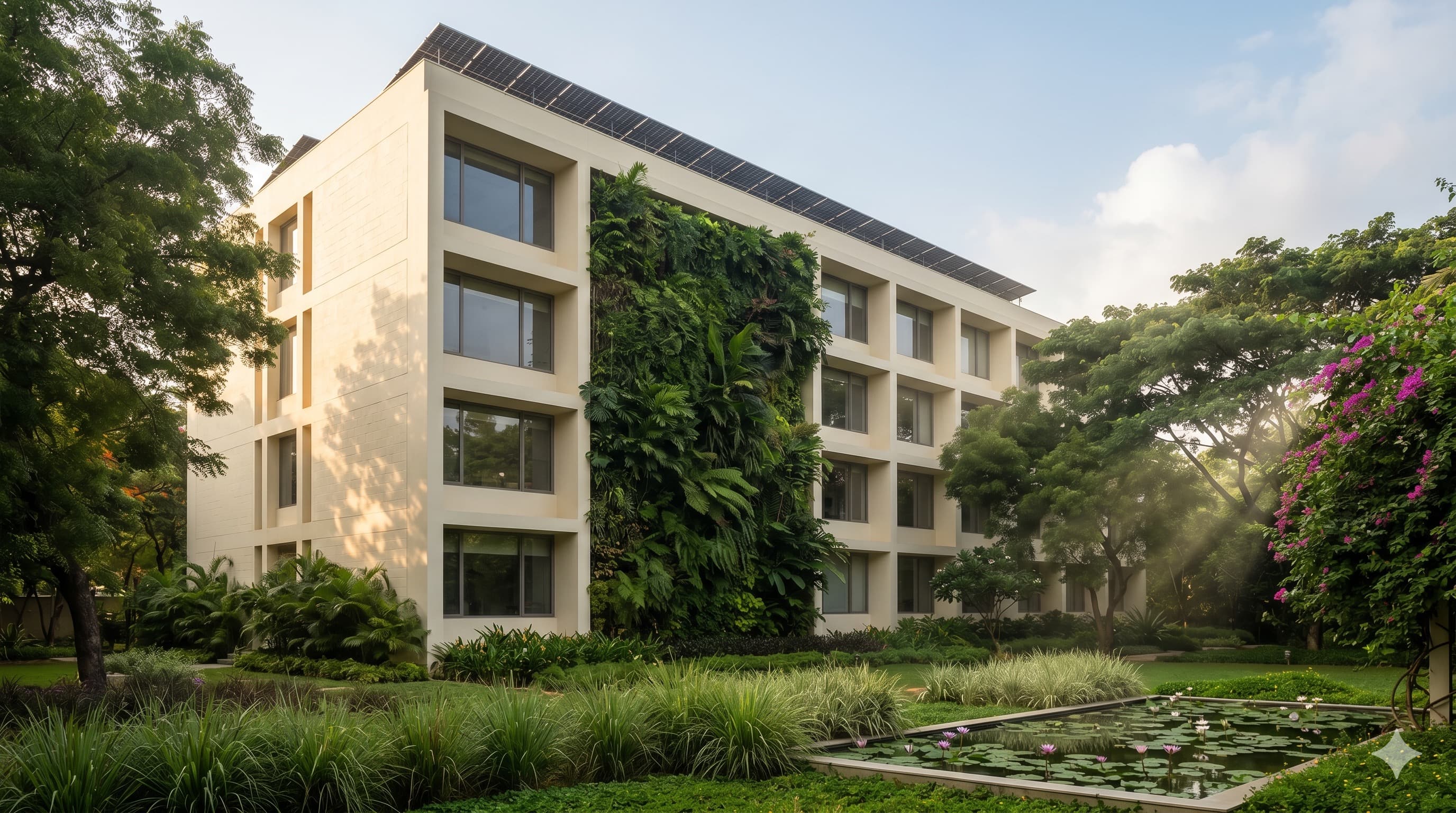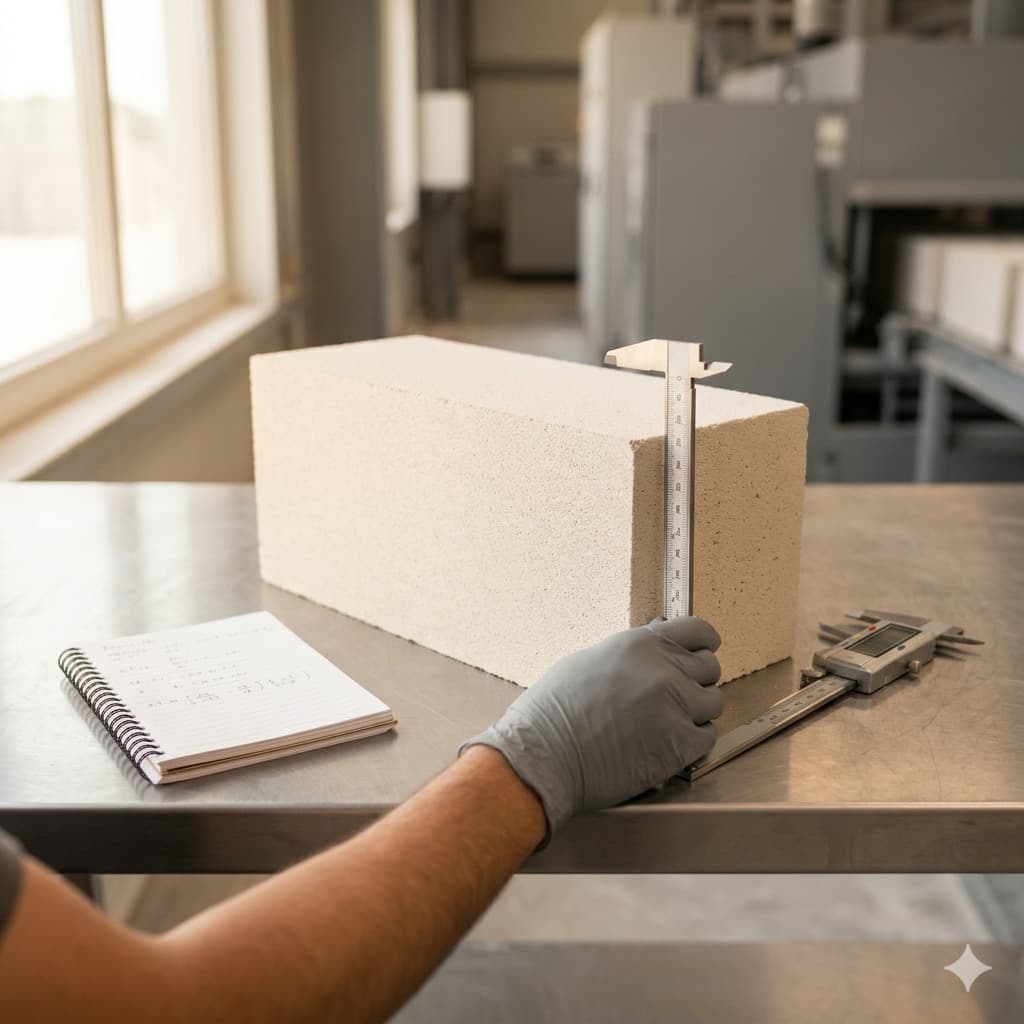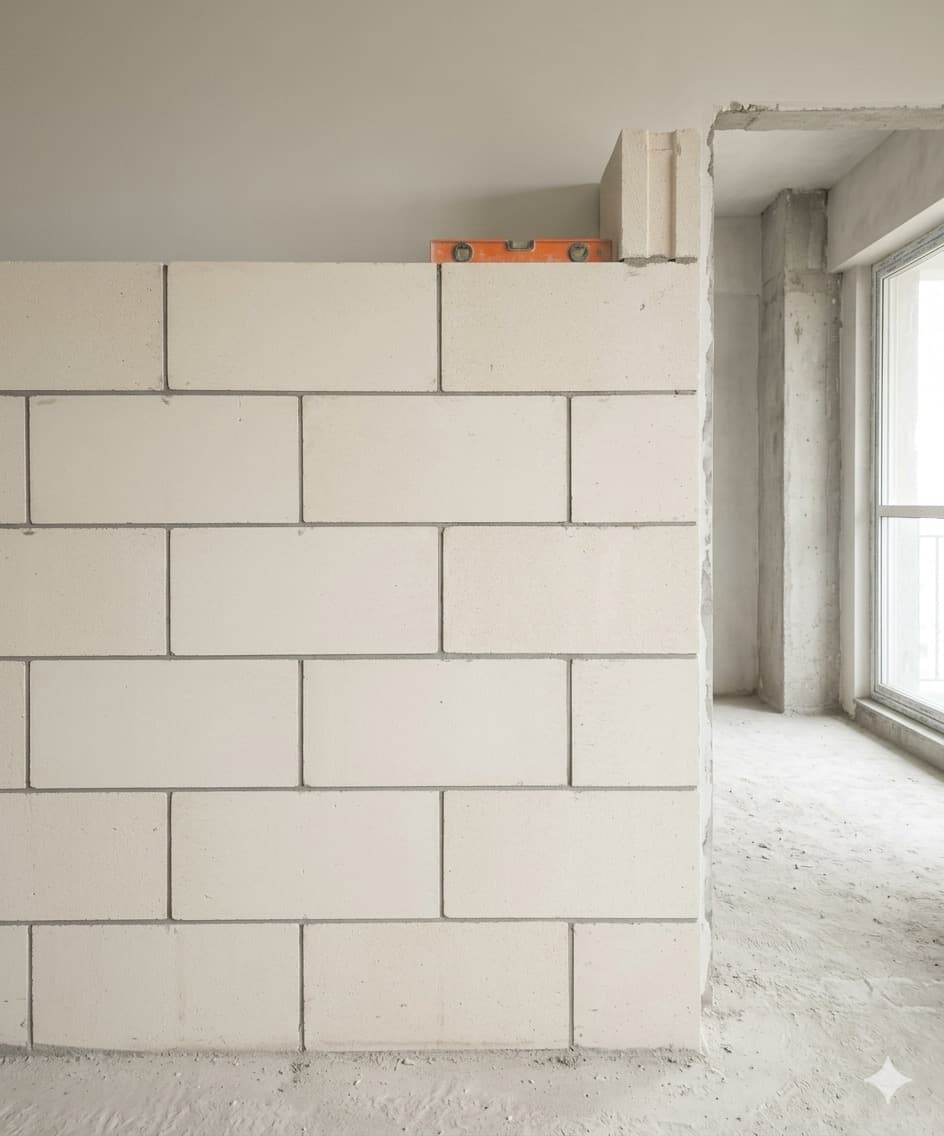
The first time a supervisor on a brick-and-mortar site sees an AAC wall going up, the joint thickness is the thing that surprises them. They're used to 10–12 mm of grey mortar slumping between courses. With AAC, the joint is 2–3 mm of a tan-coloured adhesive paste — and it's not a shortcut. It's the only way the wall actually works.
Why thin-bed is the spec, not the option
AAC's whole proposition rests on two things: low density (600 kg/m³) and uniform cellular structure. Both come from the autoclave process. Both are undermined by traditional cement mortar. A 12 mm cement joint at 1,800 kg/m³ is three times the density of the block itself. Stack them five courses tall and the joints — not the blocks — start to dominate the wall's weight, its thermal conductivity, and the chase it creates for water.
Thin-bed adhesive solves all three. The paste matches the block's density closely (typically 1,400 kg/m³), cures to a flexural strength higher than the block, and forms a continuous bond without micro-voids. When you tap a properly laid AAC wall, it rings like one piece — because it effectively is.
The numbers that change
- Wall weight: drops 6–8% vs. cement-mortar AAC, ~25% vs. red-brick wall.
- Thermal U-value: 0.45 W/m²K with thin-bed, 0.62 with cement mortar — a 38% degradation just from the joint.
- Plaster cycle: a thin-bed wall takes one 6 mm finishing coat. Cement-jointed AAC needs the standard 12 mm + putty.
- Site speed: 22–25 m²/mason/day on thin-bed, 14–16 on cement-mortar AAC, 10–12 on brick.
“Once a site team makes the switch, they don't go back. The mason saves time, the engineer saves load, the architect saves wall thickness. The only person who has to adapt is the supervisor, and that's a one-week curve.”
The three mistakes we see on site
First, mixing the adhesive too wet. The right consistency is yoghurt — not soup. A wet mix slumps and the joint thickens beyond 4 mm, which immediately costs you everything you came for.
Second, skipping the notched trowel. The teeth on the trowel meter the paste to a precise bead. Free-spreading by hand always over-applies and wastes material.
Third, laying a course higher than 1.2 m without a curing pause. AAC absorbs water aggressively in the first hour after laying. Stack too fast and you get differential drying between the top and bottom of the lift, which shows up later as hairline cracks at the joints.
Get those three right and the wall will outlive the building. Get any one of them wrong and you've spent extra to build a worse wall than red brick. That's why our team trains every site crew personally on the first delivery — it's part of the price.