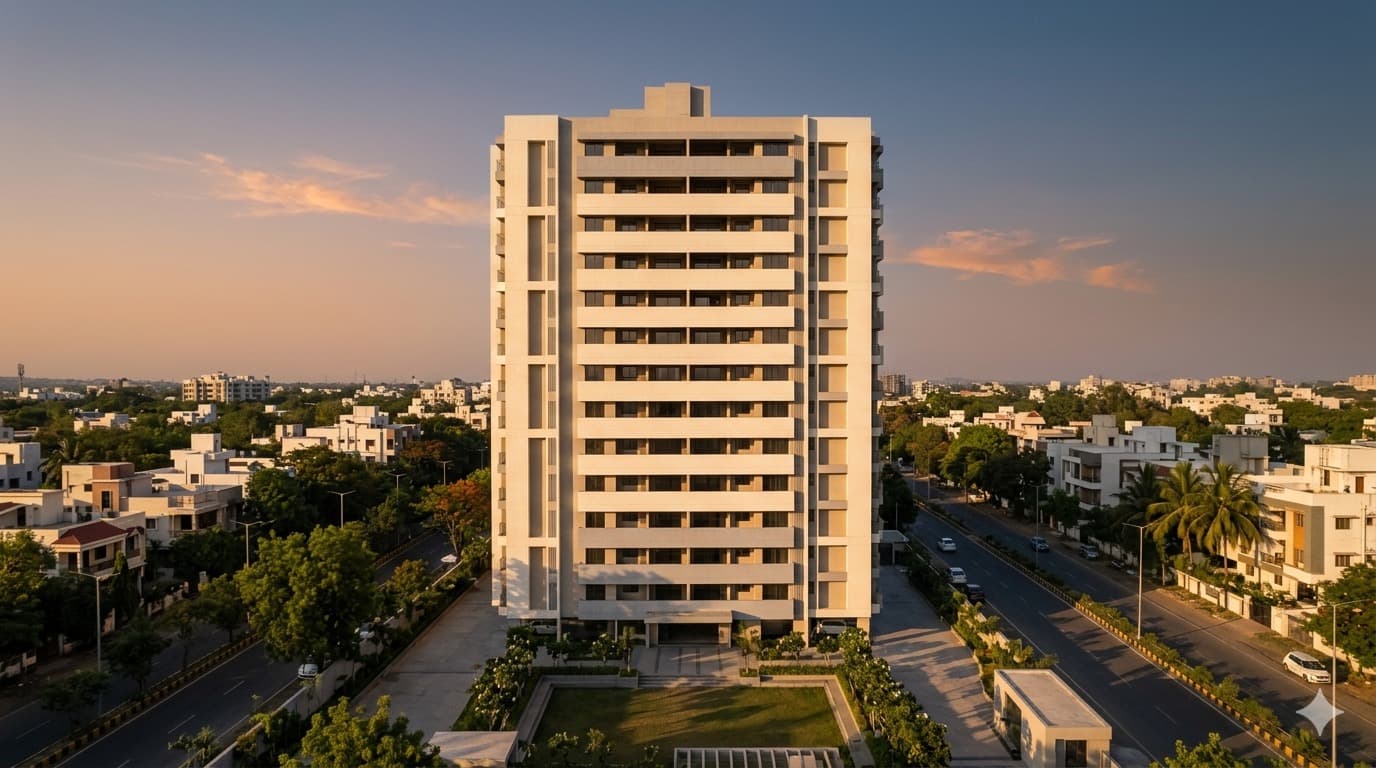
Nirvana Heights was the first project the Hingna plant supplied at scale. 14 floors, 72 units, 1,420 cubic metres of AAC across a 14-month build. By the end, the structural team had picked up 18 days against a schedule that everyone signed off as 'optimistic'. Here's what actually happened.
The baseline schedule
The original plan, drawn up in late 2024, assumed a conventional red-brick walling cycle of 22 days per floor — 10 days for masonry, 8 for plaster, 4 for curing and clean-up. For 14 floors that's 308 calendar days. Add monsoon contingency and the wall package was a year-long beast.
What changed when we switched to AAC at floor 2
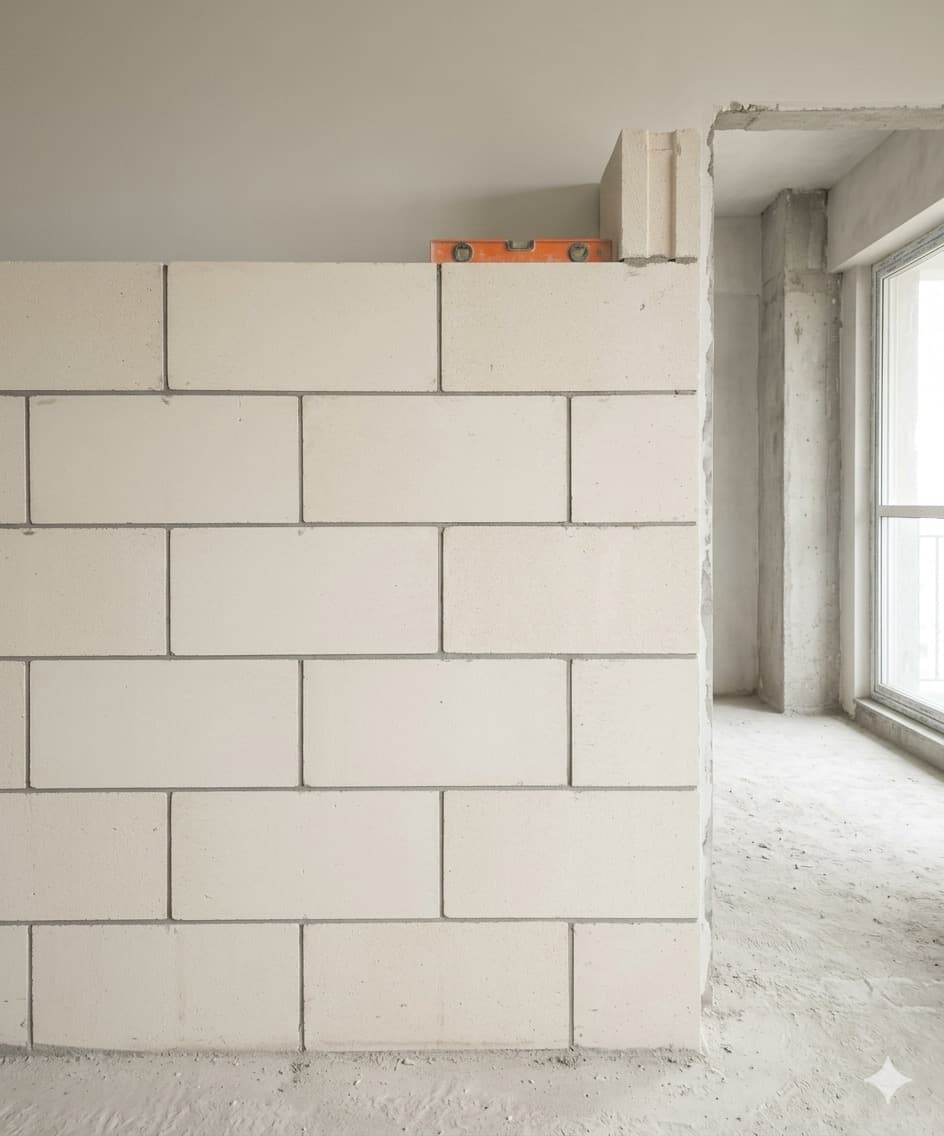
The first floor went in conventional brick — the architect hadn't finalised the AAC switch yet. Floor 2 onwards used VAJRA. The crew composition changed immediately: from 14 masons per floor to 8 masons + 2 cutters. The 10-day masonry cycle compressed to 6 days.
- Masonry: 6 days/floor (was 10)
- Plaster: 5 days/floor with 6 mm single-coat (was 8 days with 12 mm + putty)
- Curing: 2 days/floor (was 4)
- Total per floor: 13 days vs. 22
The monsoon decision that saved us
July hit harder than forecast. Three consecutive weeks of heavy rain would have shut down a brick-and-cement-mortar site completely — the mortar can't cure properly in saturated air. We kept building. AAC with thin-bed adhesive cures via a chemical reaction, not water evaporation, so humidity doesn't compromise the joint. We tarped the building edges, ran dehumidifiers in the active floor, and kept the trowels moving.
“Three weeks of monsoon usually costs you a month of schedule. We lost five days. That alone paid for the AAC premium twice over.”
What we'd change next time
Two things. First, we'd specify the 6-inch (150 mm) block as standard for both internal and external instead of mixing 6 and 8. The variety added a small but real procurement complexity and we ended up with leftover 8-inch stock. Second, we'd train the plumbing and electrical chase team earlier — the first three floors had over-deep chases that needed remedial filling. From floor 4, with the right tools, the chase work was faster than brick.
The numbers, in summary
- 18 days ahead of schedule (vs. brick-equivalent baseline)
- Steel reduction: 7% on the foundation raft (dead load drop)
- Plaster material saved: 28% of original BOM
- Interior temp delta vs. comparable brick tower: −4.6°C peak summer
- Zero hairline cracks recorded at 12-month inspection
Nirvana Heights wasn't a marketing project — it was a real building with real deadlines. The fact that AAC made it easier, not harder, is the only sales pitch I make on a site visit. The numbers do the rest.